
Hallux Valgus
Information published by IRCOS about Hallux Valgus: relevant practitioners, available content and related documents to help you prepare for your consultation.
Hallux valgus
What are you suffering from?
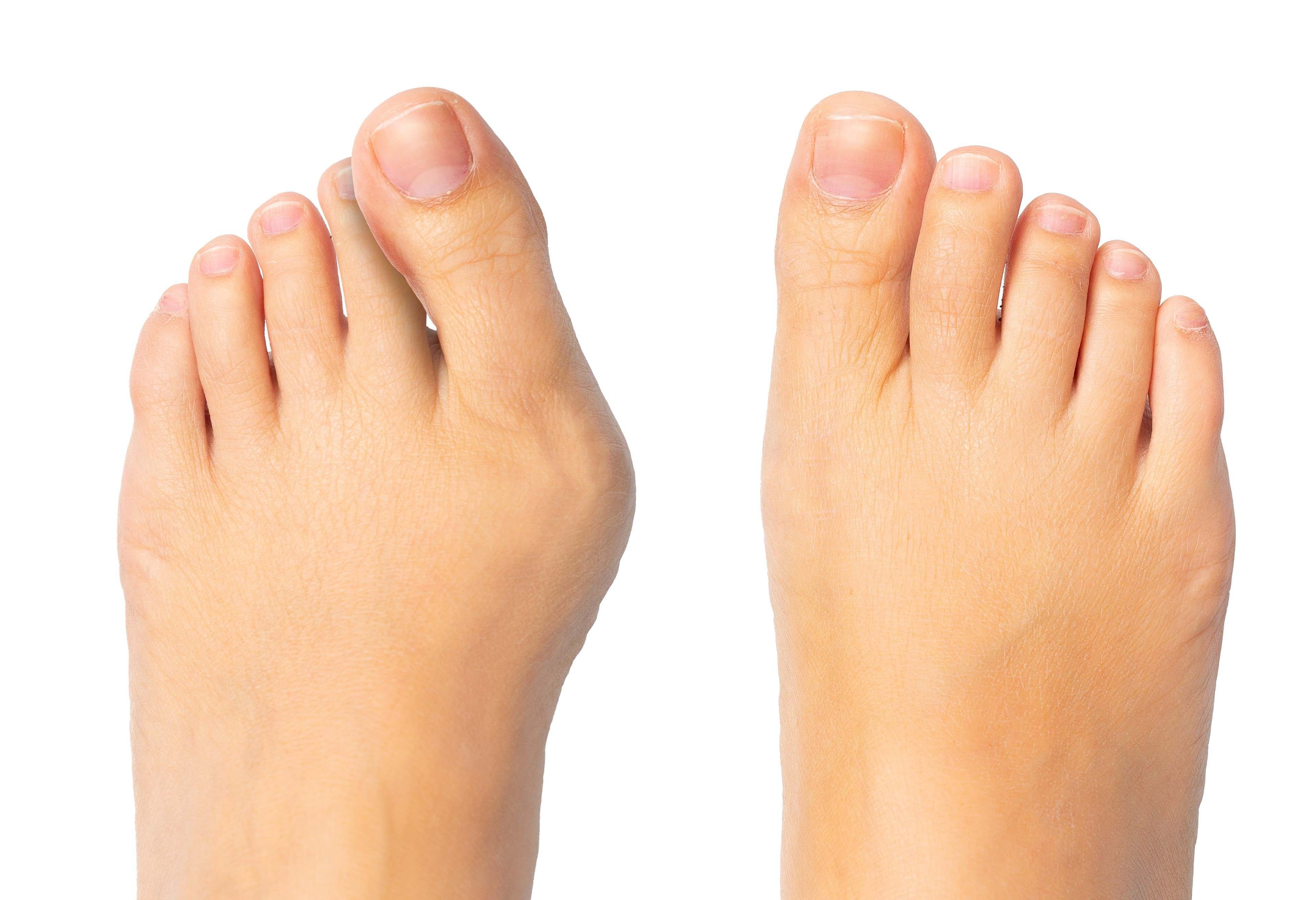
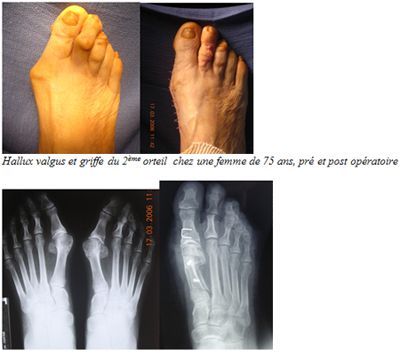
This very common deformation corresponds to the deviation of the big toe.
There are likely family causes. Some people develop this deformity from a very young age. There is a female predisposition.
Most often it is a weakening of the joint capsule which can no longer combat the constraints on the big toe. These constraints are permanent when walking and are accentuated by wearing heels and especially shoes with pointed toes.
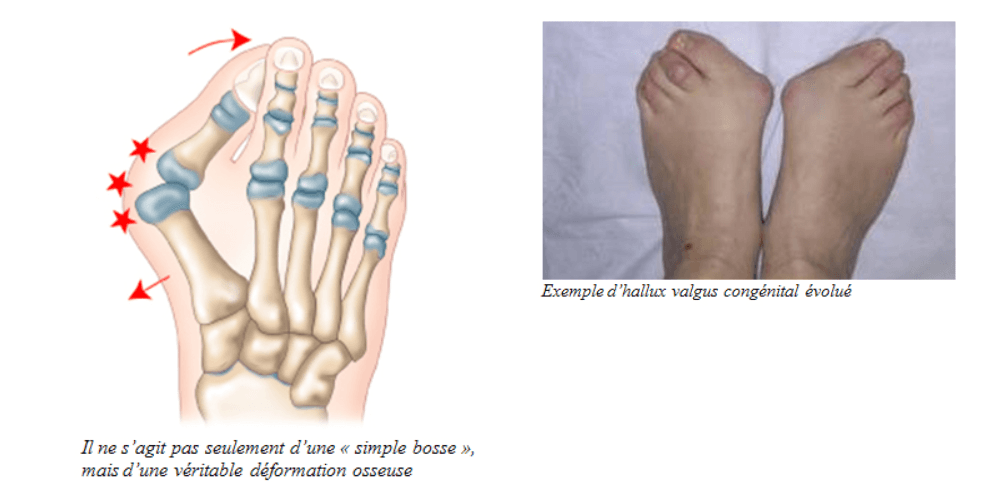
Gradually the forefoot widens, the big toe pushes the lateral toes. A painful exostosis occurs and “rubs” against the shoe upper.
When the pain is stubborn, it is time to operate. This is the only effective treatment for “straightening” the big toe. This deviation is irreversible and will gradually worsen.
Interventions
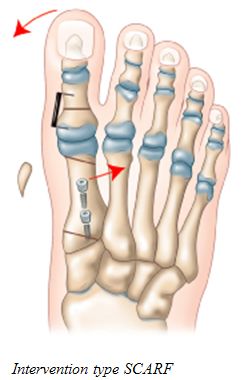
SCARF osteotomy
The intervention more and more often consists of correcting the bony deviation by a bone cut on the 1st metatarsal which allows the forefoot to be “tightened” and the big toe to be straightened. The correction is maintained by 2 screws buried in the bone which are usually left permanently.
Certain tendons which pull the big toe are removed and risk perpetuating the deformation. Often a bony gesture is associated with the big toe. (We often shorten the big toe by a millimeter, which does not change the “size”)
The procedure most often performed is called the SCARF osteotomy, the hindsight and results of which make it a completely reliable procedure.
From a practical point of view, hospitalization is usually on an outpatient basis. The procedure takes place under regional anesthesia (the leg is numbed). In certain cases, it is possible to carry out surgical correction by a percutaneous method. This technique, which avoids making a scar, is only possible for minor deformities.
The surgical aftermath
Getting up is possible 1 to 2 hours after the procedure under cover of an orthopedic shoe which allows pressure on the heel (called Barouk shoe).
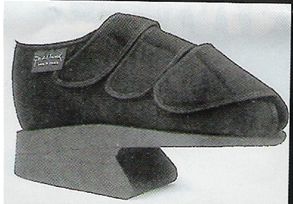
The dressing will be redone 3 days later upon discharge. The shoe should be kept for 1 month.
You should limit yourself to short movements during the first days and keep your foot horizontal when seated to prevent swelling.
The foot may remain swollen for 2 to 3 months.
Driving is permitted for 2 weeks.
The duration of the work stoppage will be adapted to the profession. There are regularly 2 months of downtime for a worker using public transport.
It is essential to do self-rehabilitation and mobilize the toes
The procedure is reliable and regularly produces good results. Complications are rare.
The risk of infection is very limited, and exceptionally justifies a new intervention
The deformity can reappear (recurrence), but rarely warrants re-intervention
Algoneurodystrophy can also occur which corresponds to prolonged, but systematically regressive, painful swelling of the foot.
Exaggerated correction can cause a deformity in the opposite direction or Hallux varus (particularly with older surgical techniques)